Multitasking is destroying your career and you probably have no idea it is happening. Every time you switch between your inbox, Slack, a spreadsheet, and a Zoom call within the same hour, you are not being productive. You are systematically damaging your cognitive performance, your professional output, and your long-term brain health. In 2026, with more digital distractions than ever before, multitasking is destroying your career faster than any bad boss or weak economy ever could.
Here are the seven science-backed reasons why — and what to do instead.
Reason 1: Multitasking Is Destroying Your Career Through Productivity Loss
The most immediate way multitasking is destroying your career is through raw productivity destruction. According to the American Psychological Association, switching between tasks can reduce productivity by up to 40 percent. That means a professional working 8 hours a day while multitasking is effectively delivering only 4.8 hours of real output. Over a year, that gap compounds into thousands of hours of lost productive work — work that your focused colleagues are completing while you are context-switching yourself into mediocrity.
Reason 2: Your Brain Cannot Actually Multitask
Here is the uncomfortable truth about multitasking. Your brain is not doing two things simultaneously. It is rapidly switching between tasks — and every switch carries a cognitive cost called a switching penalty. According to Stanford University research, heavy multitaskers are actually worse at filtering irrelevant information, slower at switching tasks, and less capable of sustained focus than people who focus on one thing at a time. Multitasking is destroying your career not just through lost output but by actively training your brain to become worse at thinking.
Reason 3: Multitasking Is Destroying Your Career by Increasing Error Rates
Every task switch introduces errors. When you are simultaneously writing a report and responding to messages, neither task gets your full attention — and both suffer in quality. According to Forbes, the error rate for multitasking professionals is significantly higher than for those working in focused single-task sessions. In high-stakes professional environments — financial analysis, legal work, engineering — those errors have real consequences for your reputation and career trajectory.
Reason 4: It Raises Your Cortisol and Destroys Mental Health
Multitasking is not just an efficiency problem. It is a health problem. Research published in the Journal of Experimental Psychology found that task switching significantly elevates cortisol levels — the primary stress hormone. Chronically elevated cortisol damages memory, weakens immune function, disrupts sleep, and contributes to anxiety and burnout. American professionals are already facing a mental health crisis in 2026. Multitasking is destroying your career by burning you out long before you reach your potential.
Reason 5: Multitasking Is Destroying Your Career by Damaging Your Reputation
Your colleagues and managers notice your distraction even when you think you are hiding it. Responding to emails during meetings, missing details in conversations because you were simultaneously checking your phone, submitting work with avoidable errors — these behaviors signal to decision-makers that you are not fully present or fully capable. According to Harvard Business Review, professionals who are perceived as chronic multitaskers are less likely to be trusted with high-stakes projects and leadership responsibilities.
Reason 6: It Rewires Your Brain for Distraction
The most terrifying long-term effect of chronic multitasking is neurological. Stanford researchers found that heavy multitaskers show structural differences in brain regions associated with cognitive control compared to focused workers. Multitasking is destroying your career not just today but permanently rewiring your brain to crave distraction, making deep focused work increasingly difficult over time. In a professional world where deep thinking is the most valuable skill, this neurological erosion is career-ending in slow motion.
Reason 7: Single-Tasking Is the Competitive Advantage of 2026
The professionals winning in 2026 are not the ones who respond fastest or juggle the most simultaneously. They are the ones who can sit with a single complex problem for two, three, or four uninterrupted hours and produce work of extraordinary quality. According to Investopedia, high-value professional output correlates directly with sustained focused attention — not task volume. While everyone around you is multitasking themselves into mediocrity, single-tasking is the competitive advantage hiding in plain sight.
How to Stop Multitasking Starting Today
The solution is not complicated. Block 90-minute focused work sessions with all notifications disabled. Use time blocking to assign specific tasks to specific calendar windows. Close every application not relevant to your current task. Train yourself gradually — start with 25-minute focus sessions and extend them as your concentration improves.
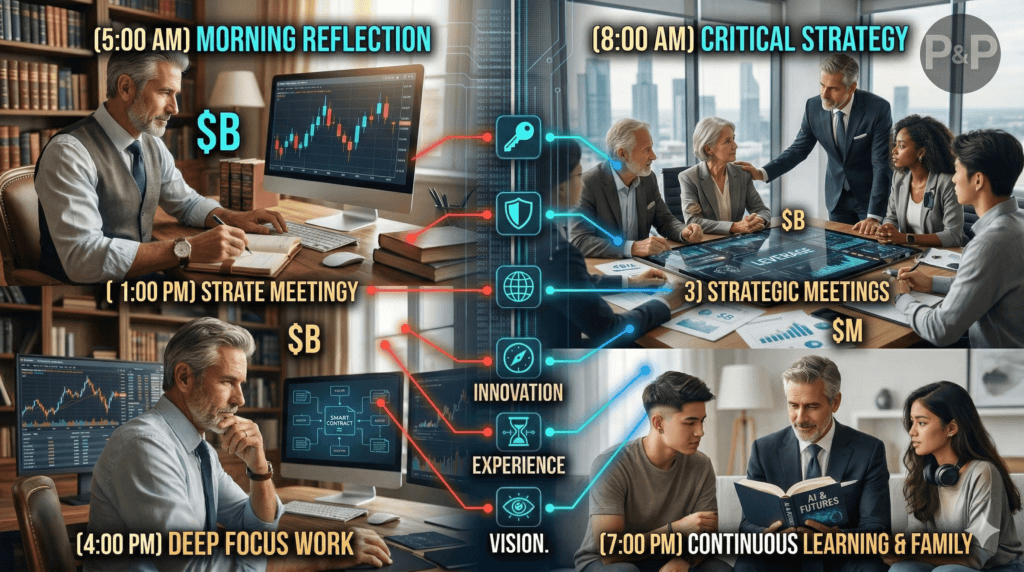
For more on how to structure your workday for maximum output, read our complete guide on How the World’s Wealthiest People Structure Their Day and discover USA Tax Day 2026 AI Tools for Remote Work Deductions.
Multitasking is destroying your career one distraction at a time. The professionals who recognize this and act on it now will compound their advantage over the next decade while everyone else stays busy going nowhere.